1. Respiration is an Intentional Tool for Biological Optimization
Respiration is the only autonomic bodily function under direct conscious control. Diaphragmatic breathing—often referred to as deep belly breathing—is the primary natural method of human respiration. By consciously engaging the large, dome-shaped diaphragm muscle, we transition the body away from passive survival mode (shallow apical chest breathing) into active systemic regulation.
2. Lower-Lung Ventilation Physically Unlocks the Nervous System
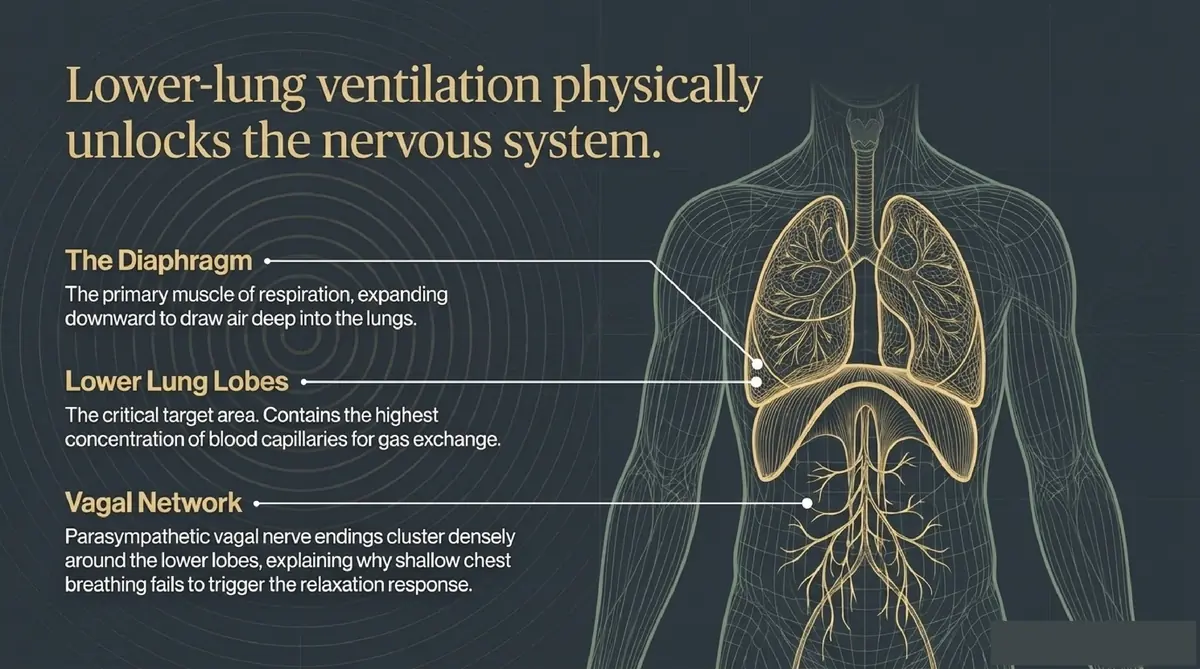
The human respiratory anatomy is engineered for lower-lung activation. When you breathe shallowly into your upper chest, you only ventilate the top portion of the lungs, which triggers mild sympathetic arousal:
The Anatomy of Lower-Lung Ventilation
- The Diaphragm: The primary muscle of respiration, expanding downward into the abdominal cavity to draw air deep into the lungs.
- Lower Lung Lobes: The critical target area containing the highest concentration of blood capillaries for gas exchange and oxygen uptake.
- Vagal Network: Parasympathetic vagal nerve endings cluster densely around the lower lung lobes. This explains why shallow chest breathing fails to trigger the relaxation response, while deep diaphragmatic expansion unlocks instant calm.
3. The Physiological Shift Matrix
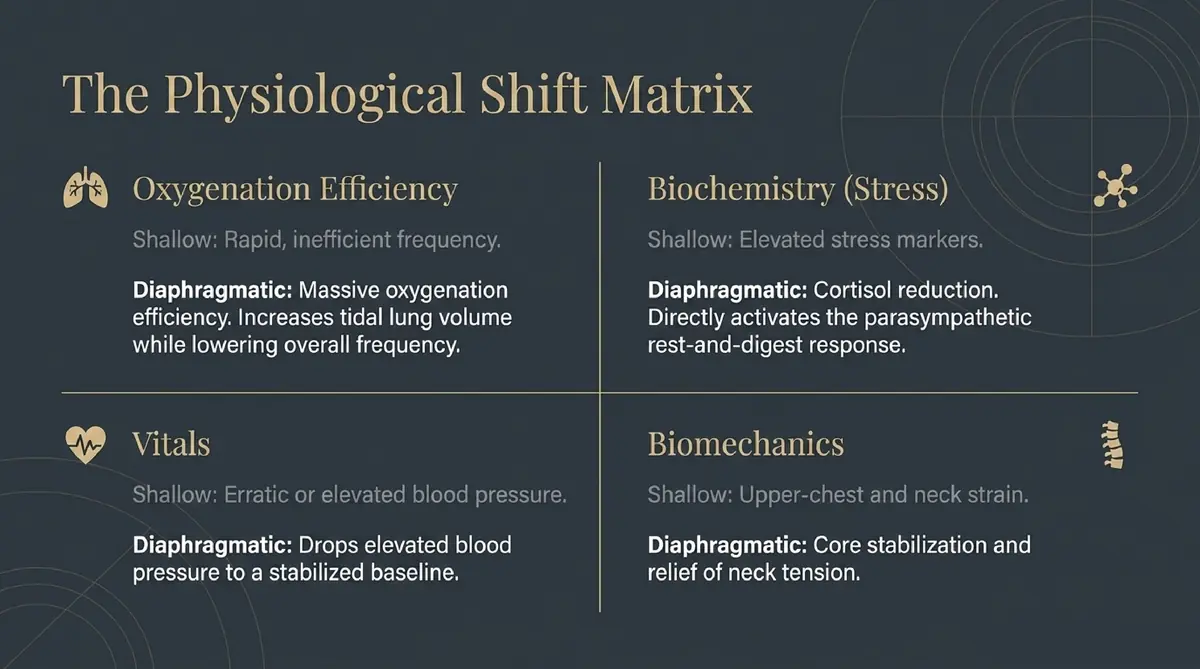
Transitioning from shallow chest breathing to diaphragmatic belly breathing causes a profound systemic shift across four biological domains:
| Domain | Shallow Chest Breathing | Diaphragmatic Belly Breathing |
|---|---|---|
| Oxygenation Efficiency | Rapid, inefficient respiratory frequency. | Massive efficiency. Increases tidal volume while lowering frequency. |
| Biochemistry (Stress) | Elevated stress markers & circulating cortisol. | Cortisol reduction; activates parasympathetic rest-and-digest response. |
| Vitals | Erratic or elevated blood pressure. | Drops elevated blood pressure to a stabilized baseline. |
| Biomechanics | Upper-chest and neck muscle strain. | Core stabilization and immediate relief of neck/shoulder tension. |
4. The 11-Second Continuous Protocol
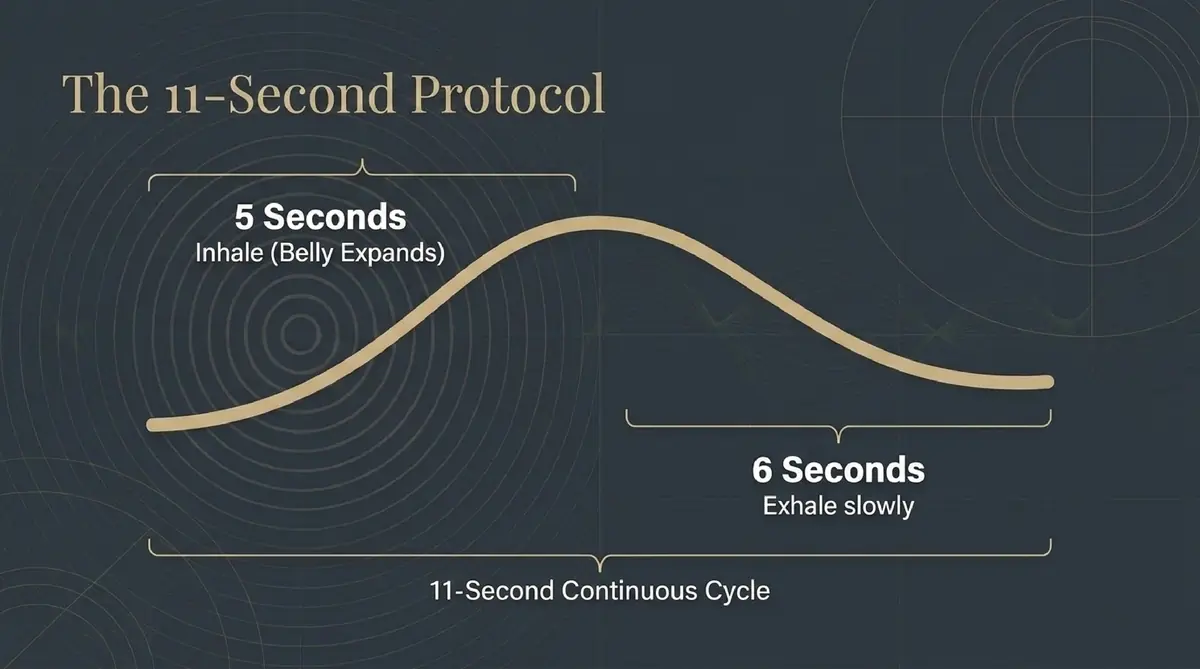
The optimal cadence for diaphragmatic training is an 11-second continuous fluid wave cycle:
- 5 Seconds — Inhale (Belly Expands): Smooth, silent nasal intake allowing the abdomen to rise naturally like a balloon.
- 6 Seconds — Exhale Slowly: Controlled, continuous exhalation through the mouth, allowing the abdomen to fall gently back toward the spine.
5. Executing the Practice: Step-by-Step Protocol
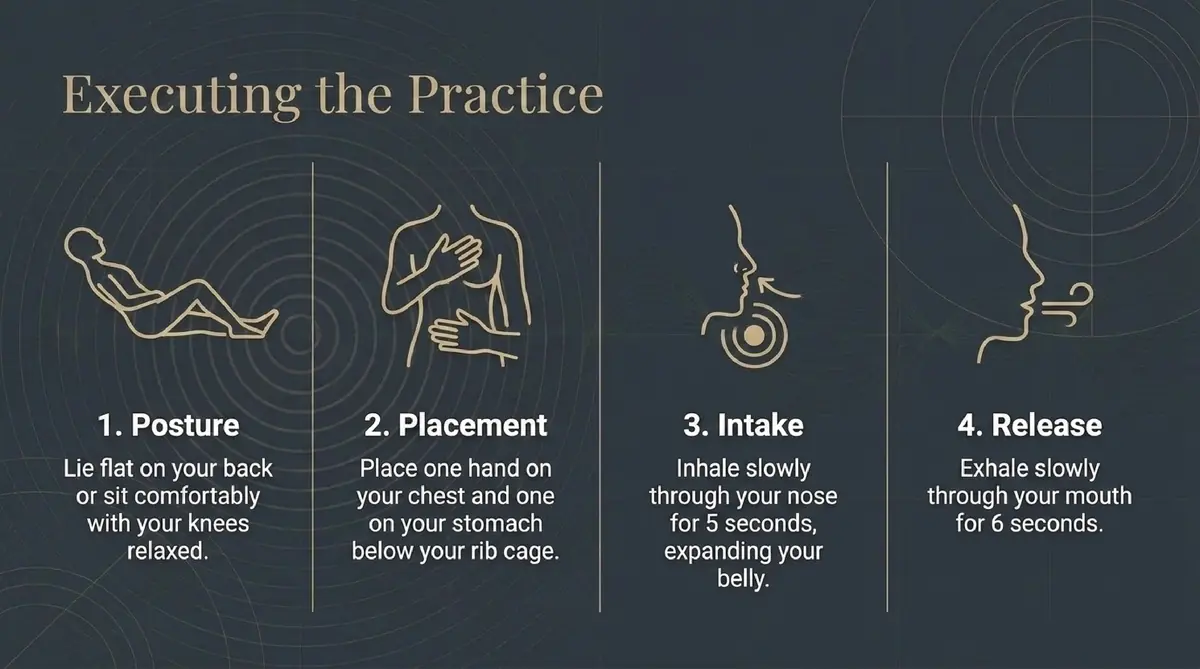
Follow these 4 execution steps for proper technique:
- 1. Posture: Lie flat on your back on a mat or bed, or sit comfortably in an upright chair with your knees relaxed.
- 2. Placement: Place one hand on your upper chest and one hand on your stomach just below your rib cage to monitor movement.
- 3. Intake: Inhale slowly through your nose for 5 seconds. Ensure the hand on your stomach rises while the hand on your chest remains still.
- 4. Release: Exhale slowly through your mouth for 6 seconds, feeling your stomach gently sink inward.
6. Integrating Intention, Physiology & Subconscious Manifestation
Completing 3, 5, or 10 session rounds (spanning 1 to 2 minutes) is biologically sufficient to lock in the parasympathetic shift.
By removing upper-body muscular tension and supplying oxygen rich lower-lung blood flow to the brain, your mind enters a tranquil state of open clarity. Concluding your session with our daily manifestation affirmation—"I trust the timing of my life and breathe in gratitude for this moment"—anchors your intentions into your subconscious mind.