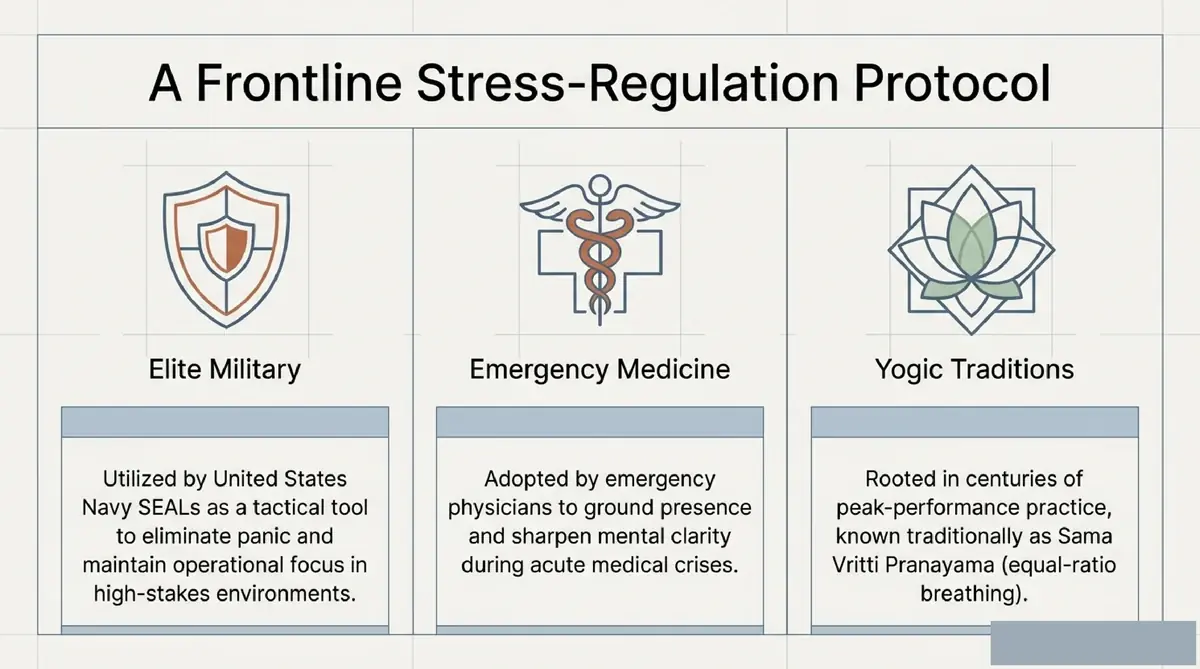
1. A Frontline Stress-Regulation Protocol
Box Breathing—historically known in yogic traditions as Sama Vritti Pranayama (equal-ratio breath control)—is a powerful physiological mechanism designed to reset the human nervous system on demand. By maintaining an exact equal timing ratio across all four phases of respiration (Inhale, Hold, Exhale, Hold), this technique acts as an autonomic control panel.
In modern times, Box Breathing has become the premier tactical stress-regulation protocol across three demanding domains:
- Elite Military: Utilized by United States Navy SEALs and special operations forces as a tactical tool to eliminate panic and maintain operational focus in high-stakes environments.
- Emergency Medicine: Adopted by emergency physicians and trauma responders to ground presence and sharpen cognitive decision-making during acute medical crises.
- Yogic Traditions: Rooted in centuries of peak-performance practice, balancing internal energy channels and stilling mental fluctuations.
2. The Sympathetic Cascade (Fight-or-Flight Response)
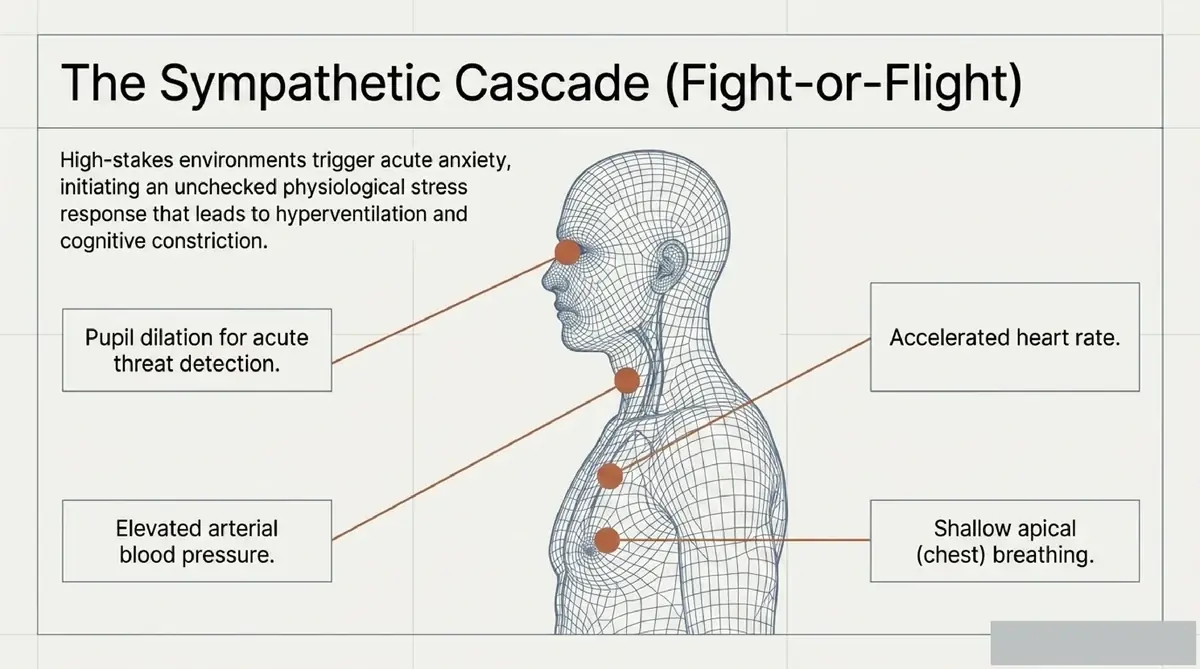
High-stakes environments, psychological pressure, and sudden threat triggers initiate an immediate, unchecked physiological stress response known as the sympathetic cascade. When the brain perceives acute stress, the sympathetic nervous system triggers systemic changes across the body:
Physiological Indicators of Sympathetic Arousal
- Pupil Dilation: Visual constriction for acute threat detection.
- Accelerated Heart Rate: Rapid cardiac output preparing muscles for exertion.
- Elevated Arterial Blood Pressure: Vascular constriction raising systemic arterial pressure.
- Shallow Apical (Chest) Breathing: Rapid, shallow breathing that causes CO₂ offloading and hyperventilation.
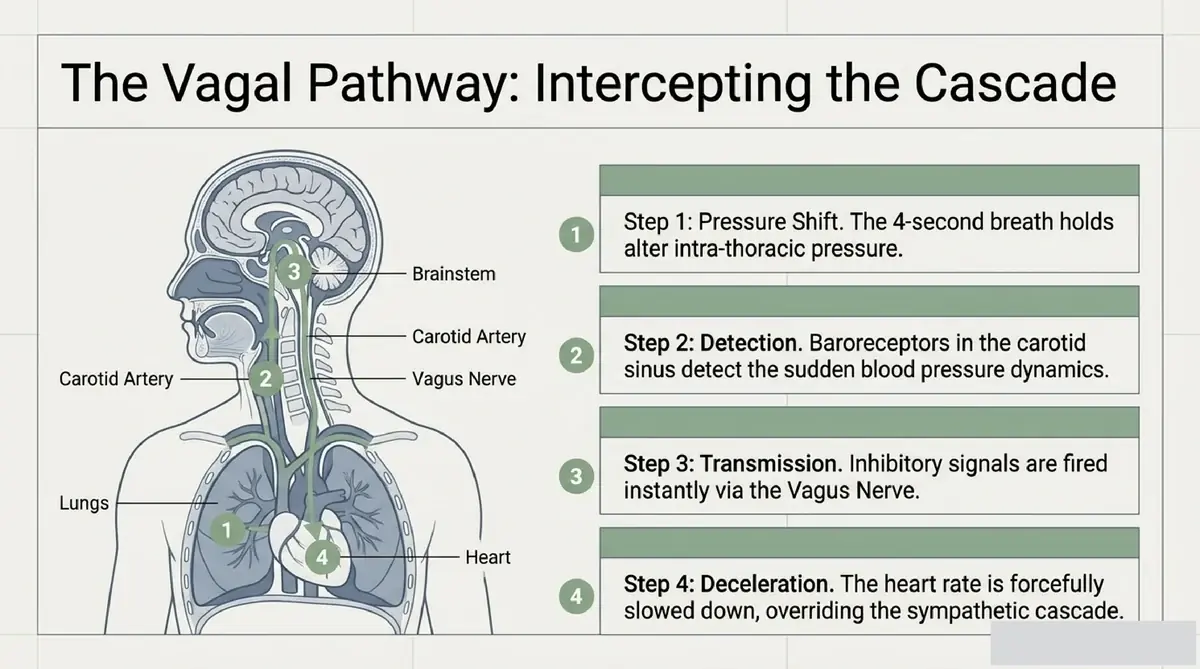
3. The Vagal Pathway: Intercepting the Stress Cascade
Box Breathing functions as an intentional bio-hack that intercepts the sympathetic cascade. By introducing structured 4-second pauses after inhalation and exhalation, you activate a four-step neuro-cardiovascular loop:
- Step 1: Pressure Shift. The 4-second breath holds significantly alter intra-thoracic pressure within the chest cavity.
- Step 2: Detection. Specialized stretch sensors called baroreceptors in the carotid sinus and aortic arch detect these sudden blood pressure dynamics.
- Step 3: Transmission. Inhibitory nerve signals are instantly generated and transmitted directly to the brainstem via afferent fibers of the Vagus Nerve.
- Step 4: Deceleration. The brainstem forces cardiac output to slow down, overriding sympathetic arousal and restoring autonomic composure.
4. Systemic Down-Regulation Impact Matrix
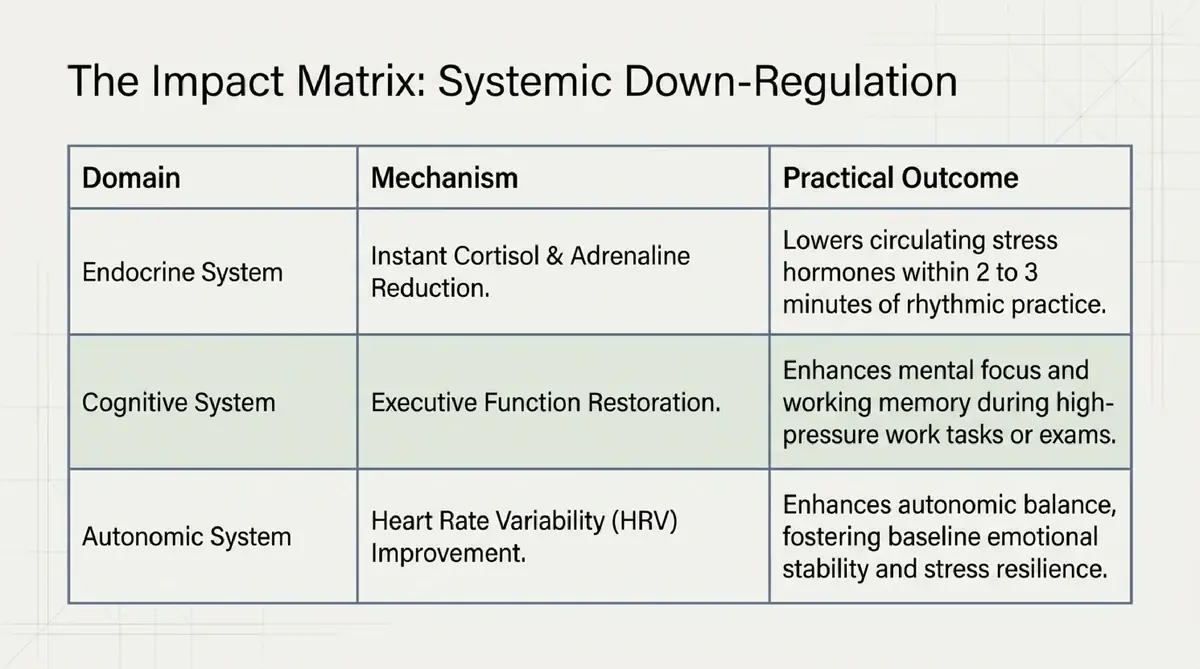
Consistent clinical practice of Box Breathing produces multi-systemic down-regulation across three vital biological domains:
| Domain | Physiological Mechanism | Practical Outcome |
|---|---|---|
| Endocrine System | Instant Cortisol & Adrenaline Reduction. | Lowers circulating stress hormones within 2 to 3 minutes of practice. |
| Cognitive System | Executive Function Restoration. | Enhances mental focus and working memory during exams or high-stakes work. |
| Autonomic System | Heart Rate Variability (HRV) Improvement. | Enhances autonomic balance, fostering baseline emotional stability. |
5. Prerequisite: Physical Setup & Posture Alignment
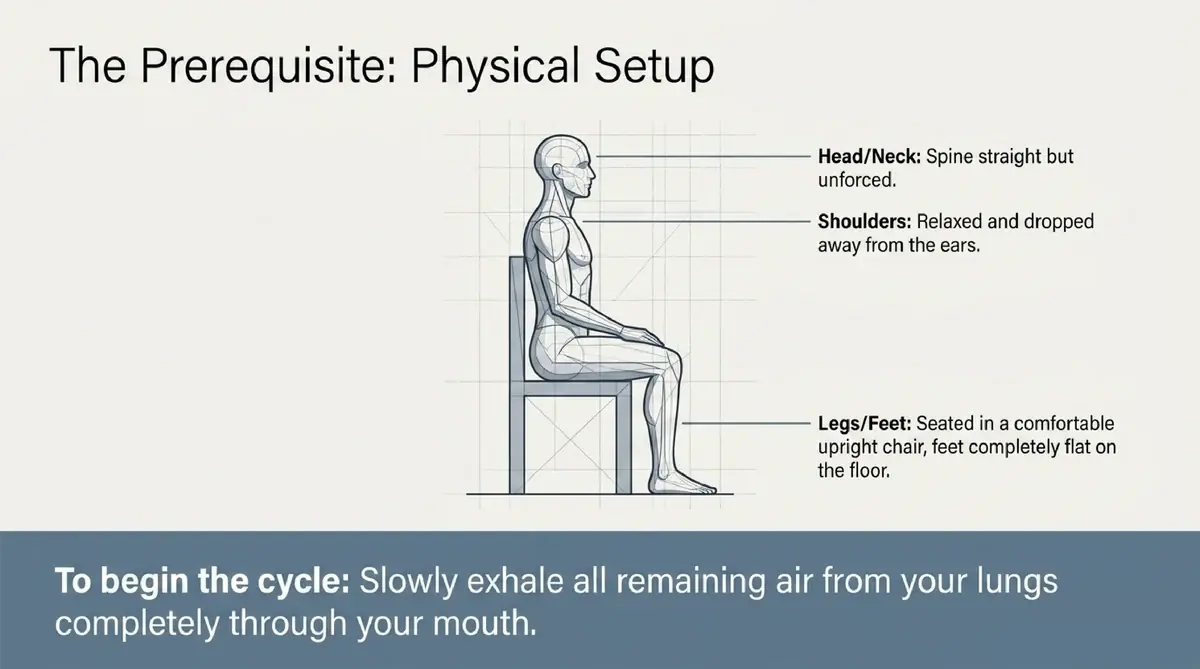
To ensure unhindered movement of the diaphragm and optimal intra-thoracic pressure dynamics, establish proper postural alignment prior to initiating your session:
- Head & Neck: Align your head directly over your shoulders with your spine straight but unforced.
- Shoulders: Relax your shoulder girdle, dropping your shoulders away from your ears.
- Legs & Feet: Sit in a comfortable upright chair with both feet flat on the floor, or sit cross-legged on a cushion.
- Initial Exhale: To begin the cycle, slowly exhale all remaining air completely through your mouth.
6. The 4-4-4-4 Equal-Ratio Protocol Execution
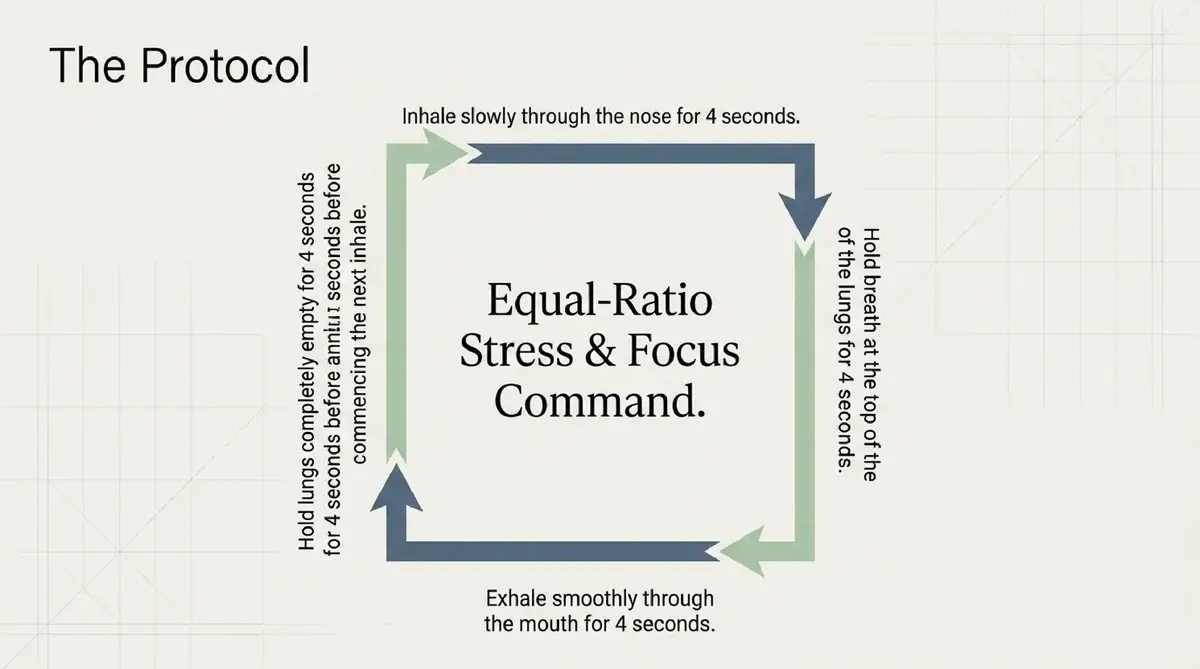
Box Breathing derives its name from the four equal sides of a square. Perform each breath cycle continuously according to the following cadence:
The 4-Step Square Breath Cadence
- Inhale (4 Seconds): Breathe in slowly and smoothly through your nose for a quiet 4-second count, expanding your abdomen and lower chest.
- Hold Full (4 Seconds): Gently hold your breath at the top of your lungs for 4 seconds without clamping your throat.
- Exhale (4 Seconds): Slowly release the air through your mouth for a smooth 4-second count.
- Hold Empty (4 Seconds): Hold your lungs completely empty for 4 seconds before commencing the next inhale.
7. Implementation & Daily Subconscious Manifestation
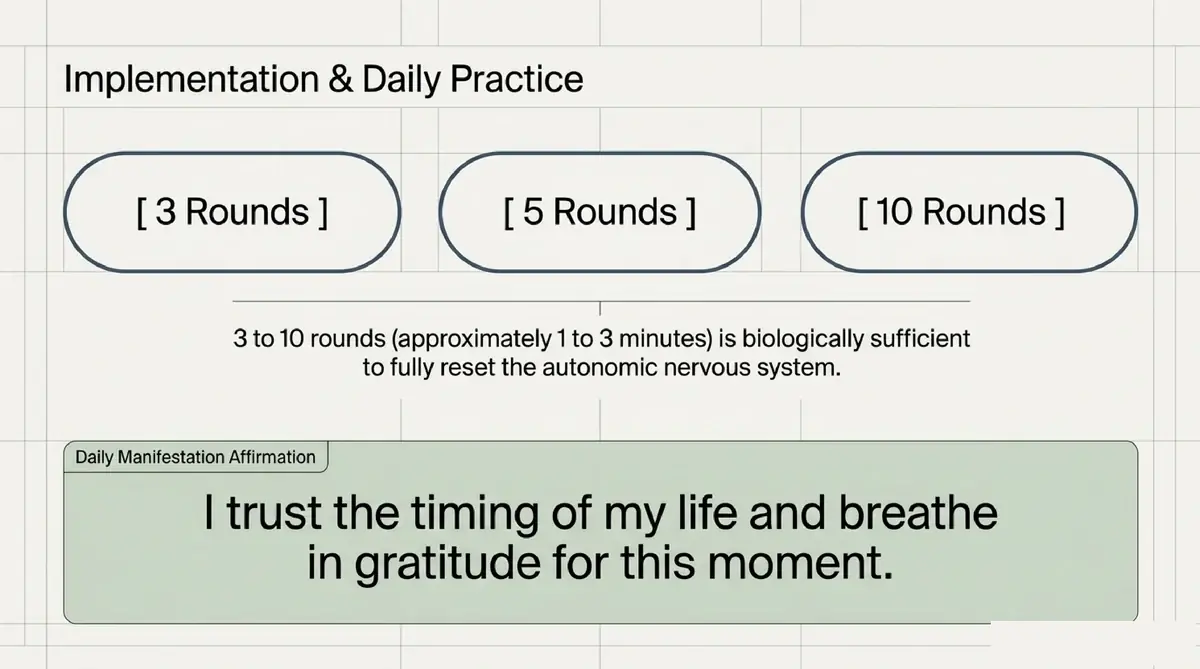
Clinical research proves that practicing 3 to 10 rounds (approximately 1 to 3 minutes) is biologically sufficient to reset the autonomic nervous system.
By down-regulating sympathetic arousal, your brain waves transition from high-frequency beta stress into relaxed alpha and theta states. In this state of neural composure, concluding your session with our daily manifestation affirmation—"I trust the timing of my life and breathe in gratitude for this moment"—anchors intentional mindset reprogramming into your subconscious mind.