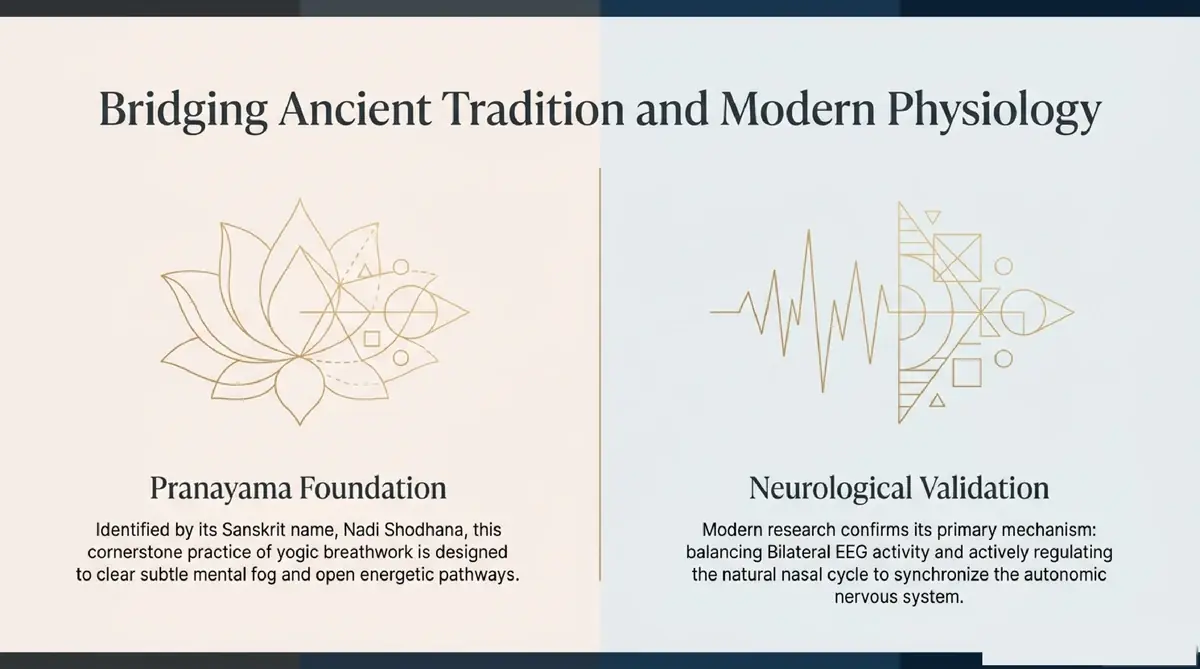
1. Bridging Ancient Tradition and Modern Physiology
Identified by its ancient Sanskrit name Nadi Shodhana (where Nadi signifies subtle energetic channels and Shodhana means purification or clearing), this cornerstone practice of yogic breathwork has been used for millennia to eliminate mental fog, balance internal vitality, and induce profound mental stillness.
While ancient yogic texts described Nadi Shodhana in terms of balancing the solar and lunar energetic currents (Pingala and Ida Nadis), modern neuroscience has validated its exact physiological mechanism: unilateral nasal airflow directly modulates contralateral cerebral cortical activity and regulates the ultradian nasal cycle.
2. The Mechanics of Hemispheric Balance
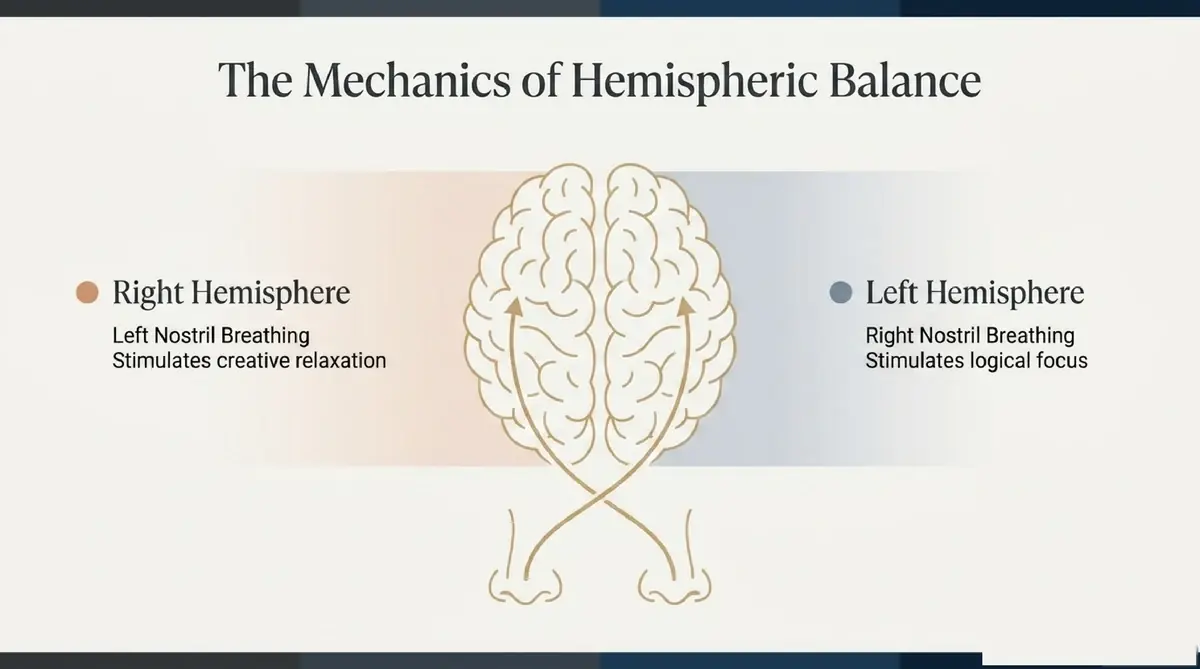
The human brain is divided into two distinct cerebral hemispheres, each governing unique neurological functions and autonomic states. Research demonstrates that forced unilateral nostril breathing creates a contralateral shift in cerebral hemisphere dominance:
Left vs. Right Hemisphere Activation
- Left Nostril Breathing (Ida Nadi): Activates the Right Cerebral Hemisphere, stimulating creative intuition, emotional spatial processing, and parasympathetic vagal relaxation.
- Right Nostril Breathing (Pingala Nadi): Activates the Left Cerebral Hemisphere, stimulating logical reasoning, mathematical processing, alertness, and sympathetic drive.
3. The 4 Neurological & Physiological Pillars
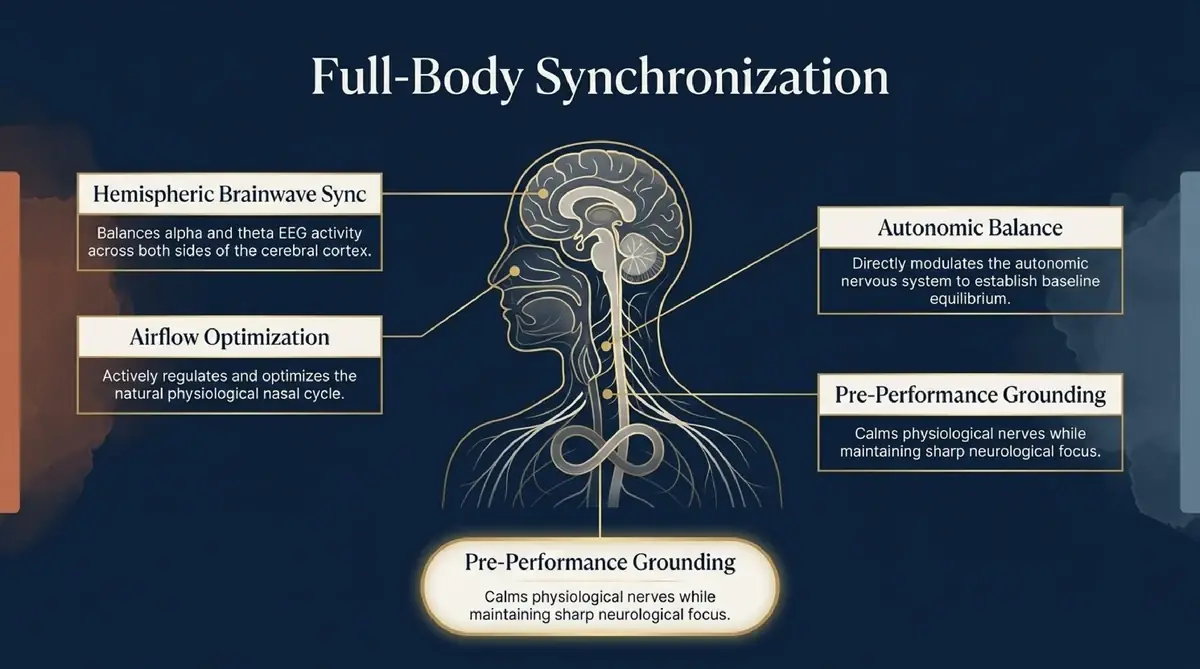
Clinical electroencephalogram (EEG) studies reveal that structured Nadi Shodhana practice produces four distinct physiological transformations:
- Full-Hemispheric Brainwave Sync: Balances alpha (8–12 Hz) and theta (4–8 Hz) EEG power spectral density evenly across both left and right prefrontal cortexes.
- Airflow & Nasal Cycle Optimization: Actively regulates the biological ultradian rhythm—the periodic alternating engorgement of erectile tissue in nasal passages controlled by the autonomic nervous system.
- Autonomic Baseline Equilibrium: Directly increases Heart Rate Variability (HRV) and baroreflex sensitivity, shifting the body out of chronic stress into baseline homeostasis.
- Pre-Performance Grounding: Eliminates performance anxiety, tremors, and cognitive scatter prior to high-stakes public speaking, athletic competition, or creative output.
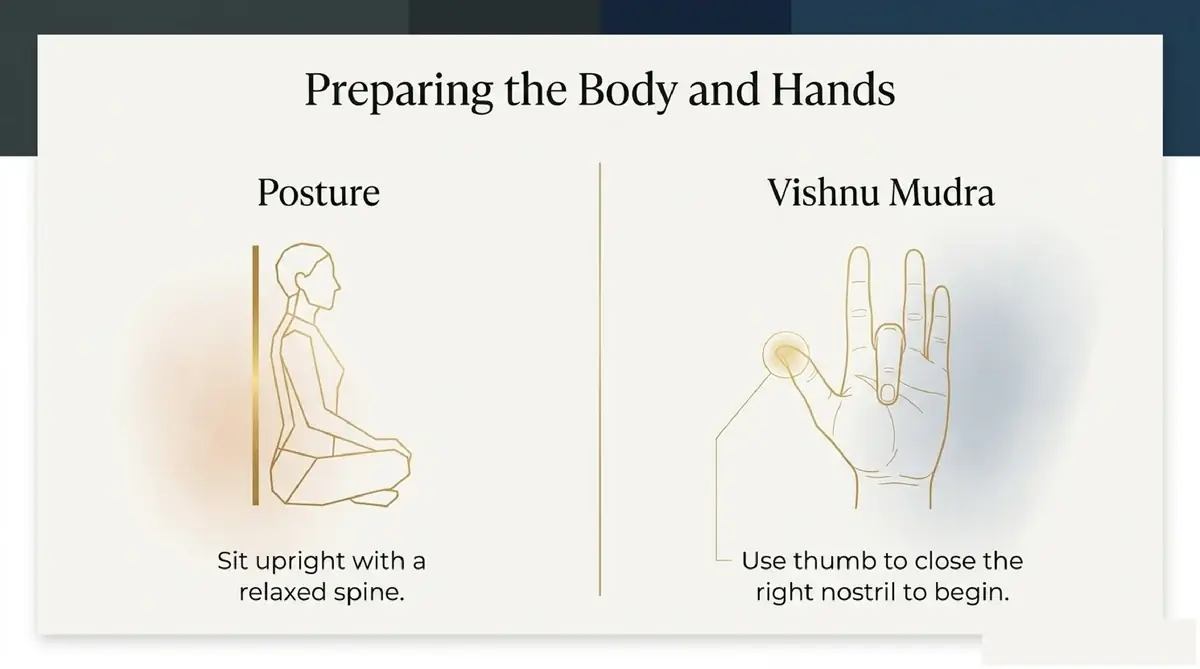
4. Preparing the Body and Hands: Posture & Vishnu Mudra
Proper ergonomic positioning is essential to allow unrestricted diaphragmatic excursion and smooth airflow during alternate nostril practice:
- Posture: Sit upright in a comfortable chair or cross-legged position with an elongated, relaxed spine, broad chest, and relaxed shoulders.
- Vishnu Mudra: Fold the index and middle fingers of your right hand inward toward the palm. Use your thumb to gently seal the right nostril and your ring/little fingers to seal the left nostril.
5. Step-by-Step Continuous Flow Algorithm
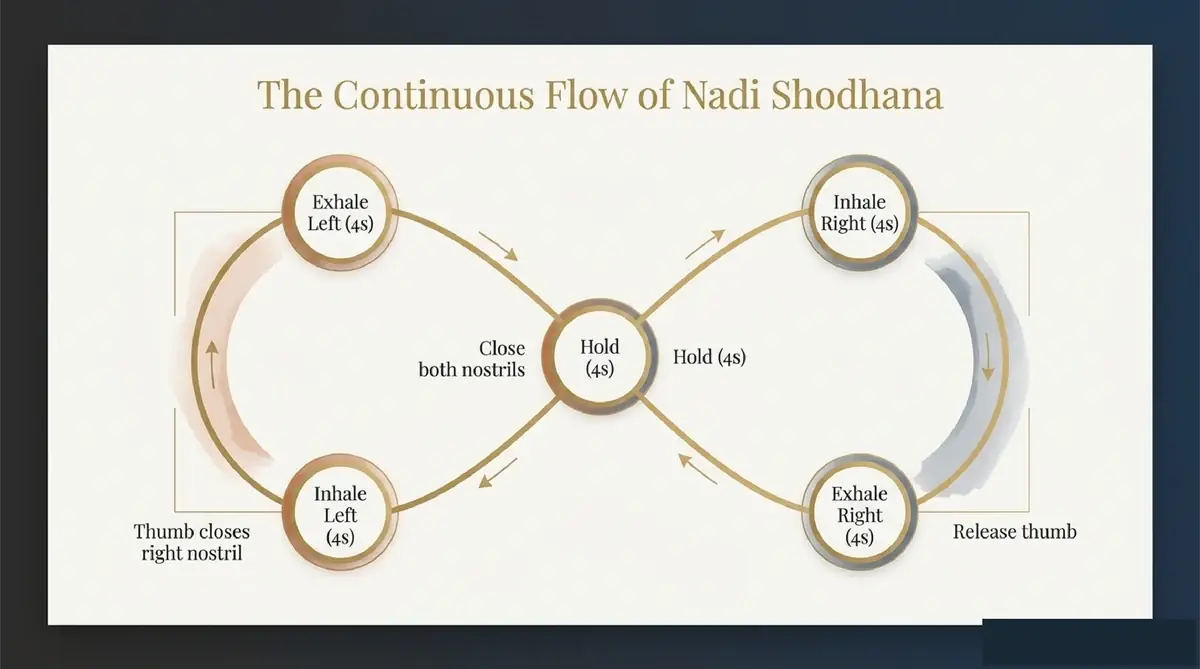
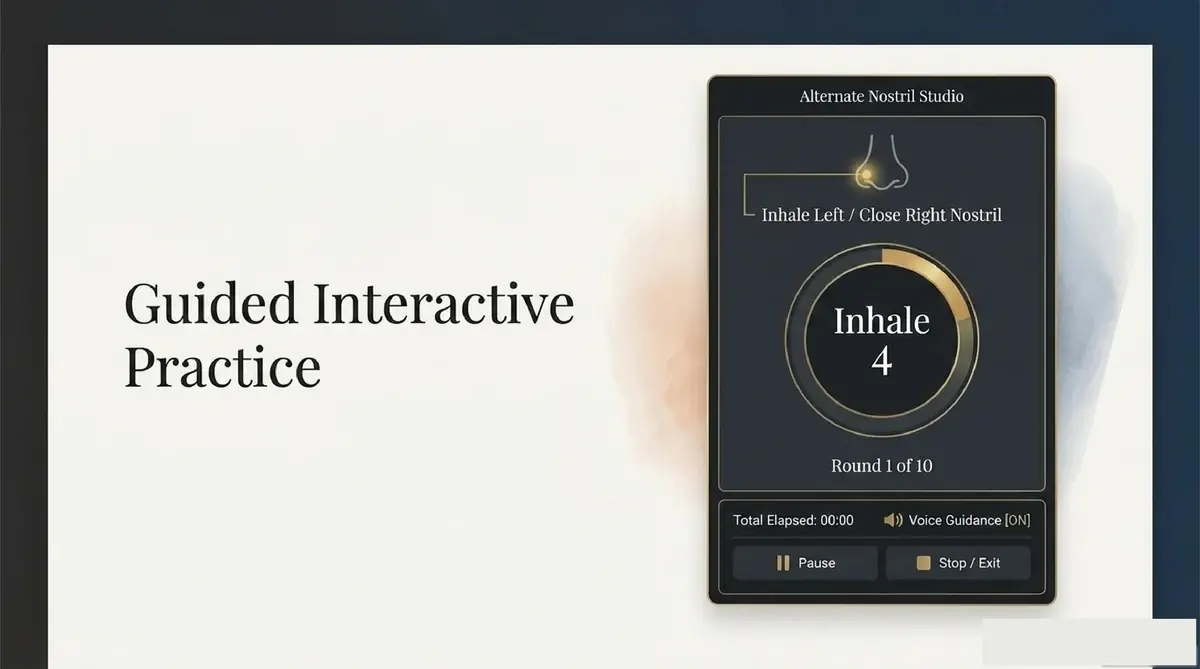
Follow this precise continuous 4-4-4 cadence algorithm for optimal bilateral balance:
The Complete Nadi Shodhana Cycle
- Inhale Left (4 Seconds): Gently close right nostril with thumb. Inhale deeply through left nostril.
- Hold Both (4 Seconds): Close both nostrils with thumb and ring finger; hold breath gently.
- Exhale Right (4 Seconds): Release thumb; exhale smoothly through right nostril.
- Inhale Right (4 Seconds): Inhale deeply through right nostril.
- Hold Both (4 Seconds): Close both nostrils and hold.
- Exhale Left (4 Seconds): Release ring finger; exhale smoothly through left nostril. This completes 1 full round.
6. Integrating Breathwork and Subconscious Manifestation
By synchronizing left and right brain hemispheres into an alpha/theta brainwave state, Nadi Shodhana opens a window of heightened subconscious suggestibility. When your autonomic nervous system reaches baseline equilibrium, the brain is receptive to positive reprogramming.
Concluding your session with our daily manifestation affirmation—"I trust the timing of my life and breathe in gratitude for this moment"—anchors your intent deeply into your neural networks.