1. Controlled Respiration Operates as a Precise Neuro-Biological Lever
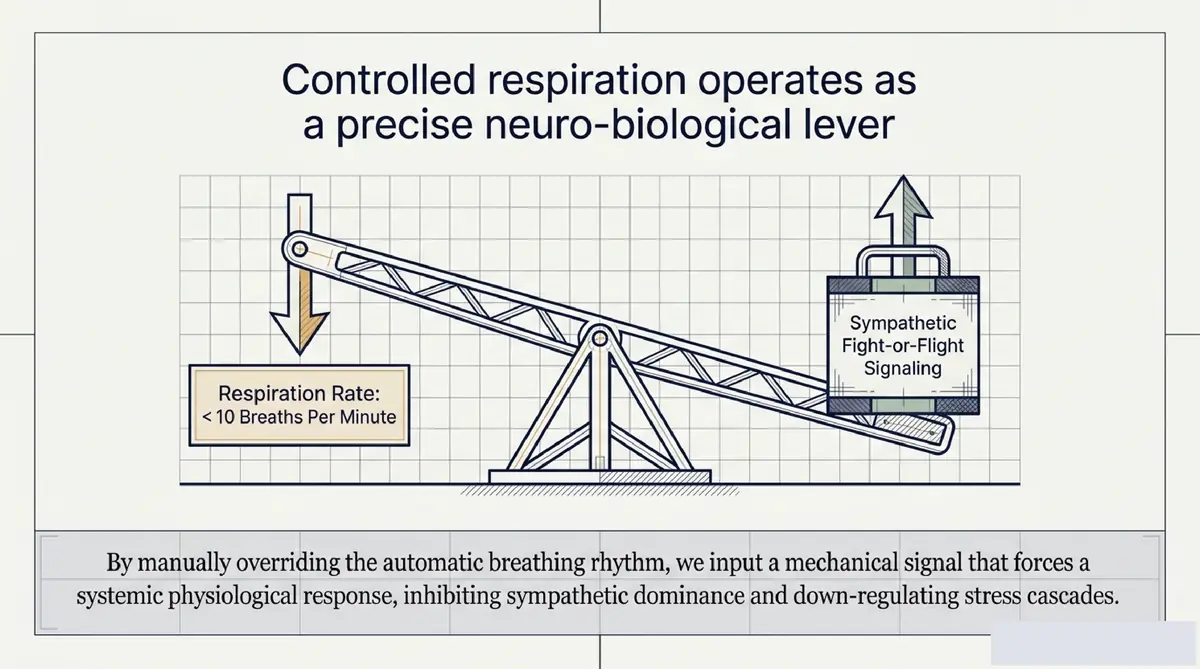
Respiration is the singular bridge connecting the conscious brain with the involuntary autonomic nervous system. By manually slowing our breathing rate below 10 breaths per minute, we input a mechanical signal that forces a systemic physiological response, inhibiting sympathetic fight-or-flight signaling and down-regulating stress cascades.
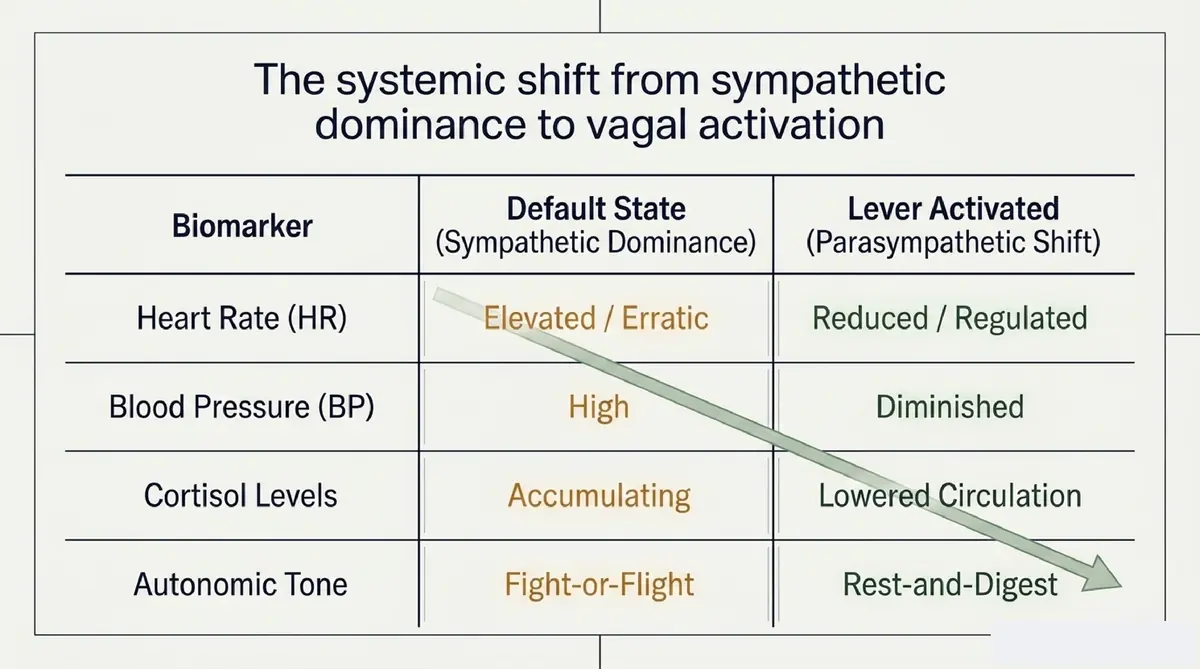
2. The Systemic Shift from Sympathetic Dominance to Vagal Activation
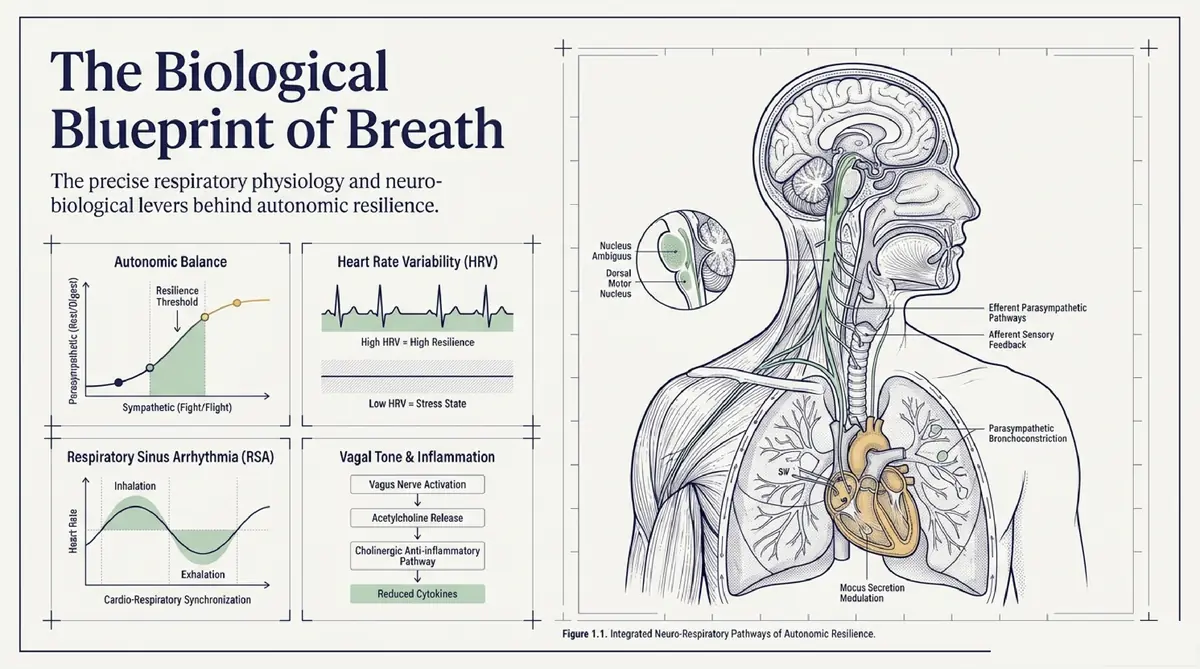
Engaging the respiratory lever induces a rapid, measurable shift in key physiological biomarkers:
| Biomarker | Default State (Sympathetic Dominance) | Lever Activated (Parasympathetic Shift) |
|---|---|---|
| Heart Rate (HR) | Elevated / Erratic cardiac output. | Reduced / Regulated resting rate. |
| Blood Pressure (BP) | High arterial constriction. | Diminished to baseline equilibrium. |
| Cortisol Levels | Accumulating circulating stress hormones. | Lowered circulation & rapid clearance. |
| Autonomic Tone | Fight-or-Flight stress state. | Rest-and-Digest vagal composure. |
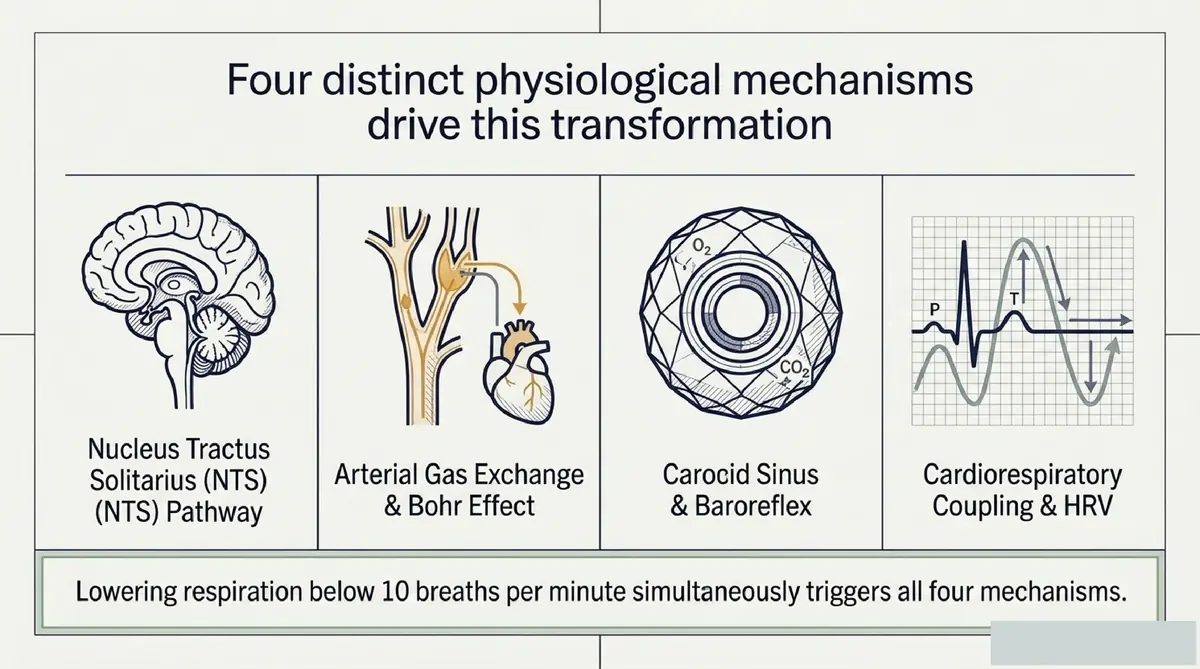
3. Four Distinct Physiological Mechanisms Drive This Transformation
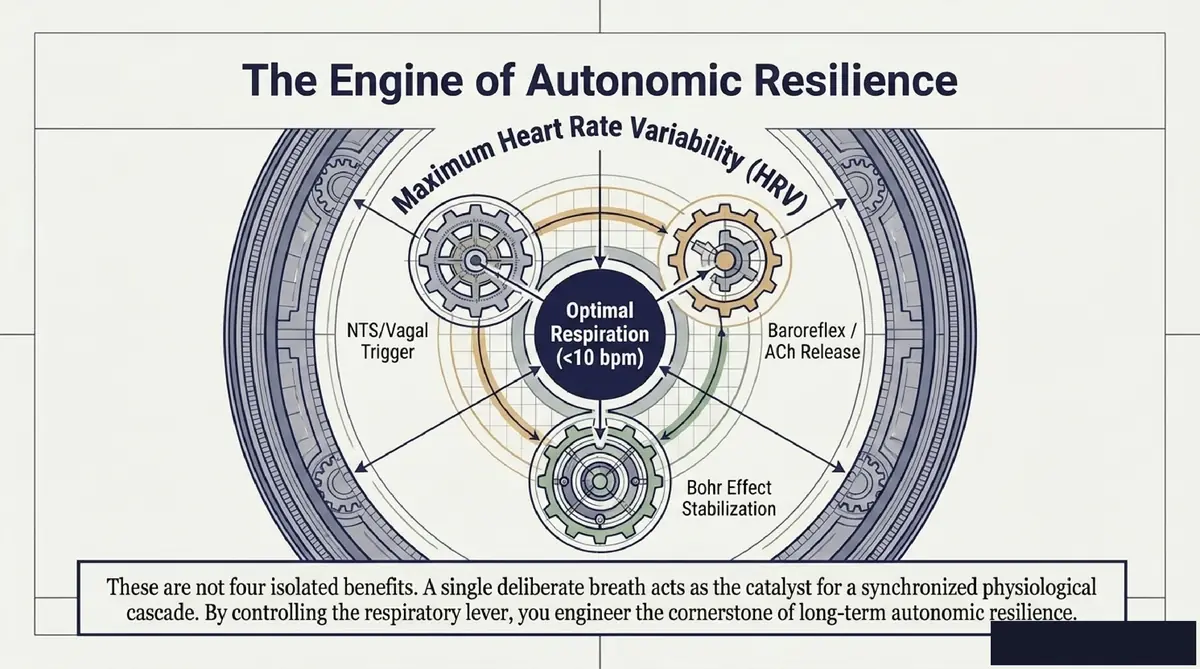
Lowering respiration below 10 breaths per minute simultaneously triggers four interconnected biological mechanisms:
The Four Pillars of Neuro-Respiratory Regulation
- Nucleus Tractus Solitarius (NTS) Pathway: Lung stretch receptors signaling the brainstem.
- Arterial Gas Exchange & Bohr Effect: CO₂-mediated tissue oxygen release.
- Carotid Sinus & Baroreflex: Expiratory pressure waves triggering acetylcholine release.
- Cardiorespiratory Coupling & HRV: Phase alignment of heart rate and respiration.
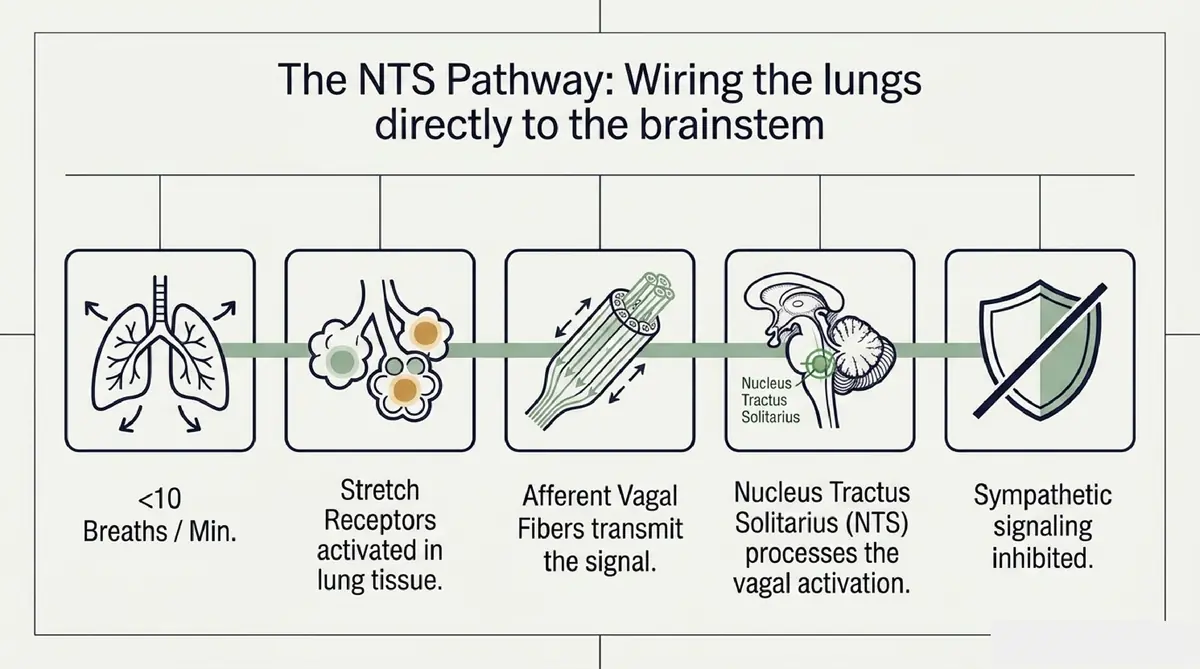
4. The NTS Pathway: Wiring the Lungs Directly to the Brainstem
When you slow your breathing to less than 10 breaths per minute, deep lung expansion activates mechanoreceptive stretch receptors in alveolar tissue.
These receptors fire electrical impulses along afferent vagal nerve fibers directly to the Nucleus Tractus Solitarius (NTS) in the brainstem. The NTS processes this vagal input and instantly inhibits sympathetic outflow to the adrenal glands and cardiovascular system.
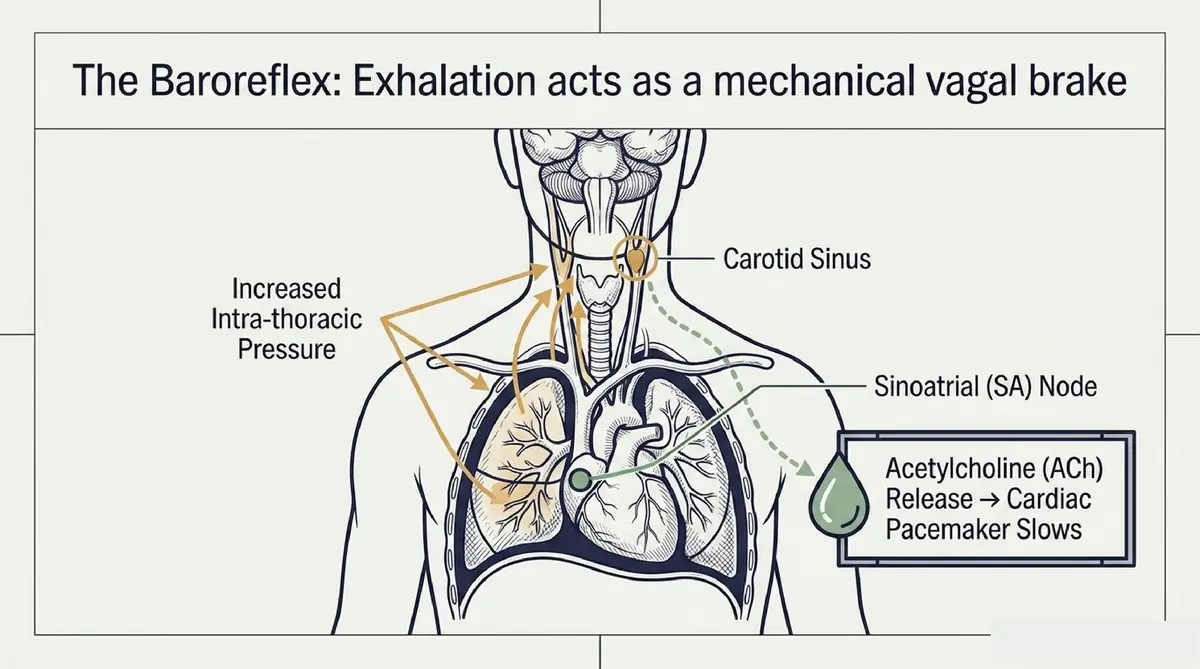
5. The Baroreflex: Exhalation Acts as a Mechanical Vagal Brake
During controlled exhalation, intra-thoracic pressure increases inside the chest cavity. This pressure wave stimulates stretch-sensitive baroreceptors located in the carotid sinus and aortic arch.
The baroreflex responds by instructing vagal nerve endings to release Acetylcholine (ACh) onto the Sinoatrial (SA) Node—the heart's natural pacemaker. Acetylcholine acts as a chemical brake, instantly slowing cardiac rate.
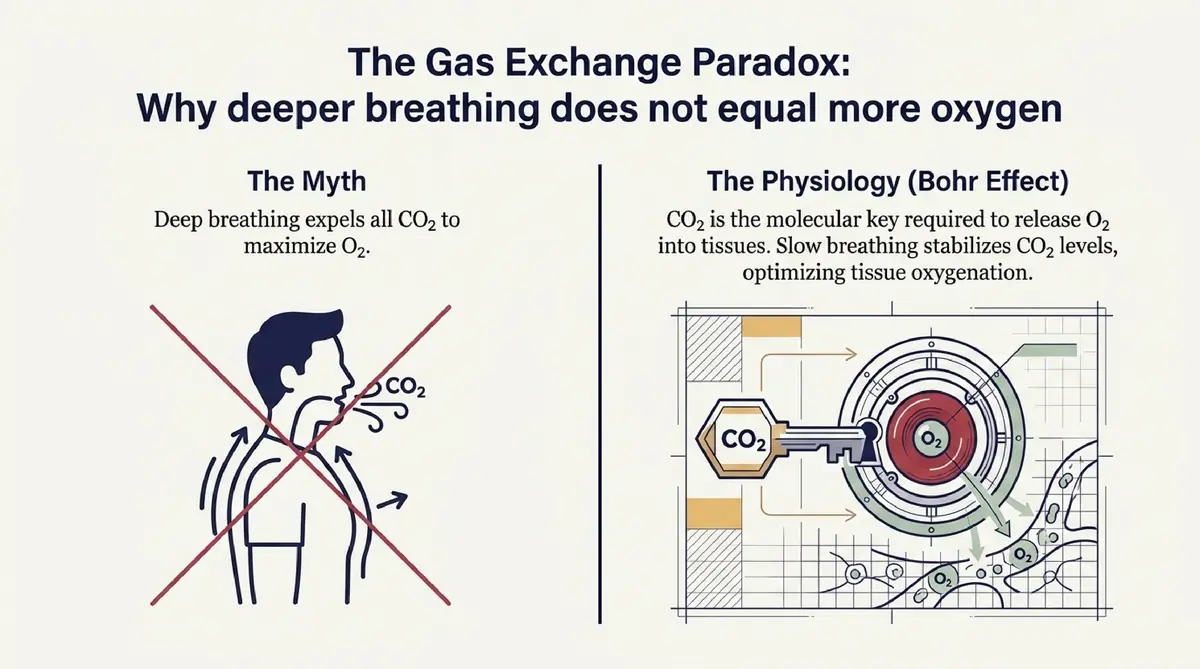
6. The Gas Exchange Paradox: Why Deeper Breathing Does Not Equal More Oxygen
A common misconception is that rapid, deep hyperventilation maximizes body oxygenation by blowing off all carbon dioxide. In biochemistry, this is a dangerous myth.
The Bohr Effect Explained
Under the Bohr Effect, carbon dioxide (CO₂) is the essential molecular key required to unbind oxygen (O₂) from blood hemoglobin so it can diffuse into brain, heart, and muscle tissue. Slow breathing (<10 bpm) stabilizes arterial CO₂ levels, unlocking optimal tissue oxygen delivery.
7. Cardiorespiratory Coupling & The Engine of Autonomic Resilience
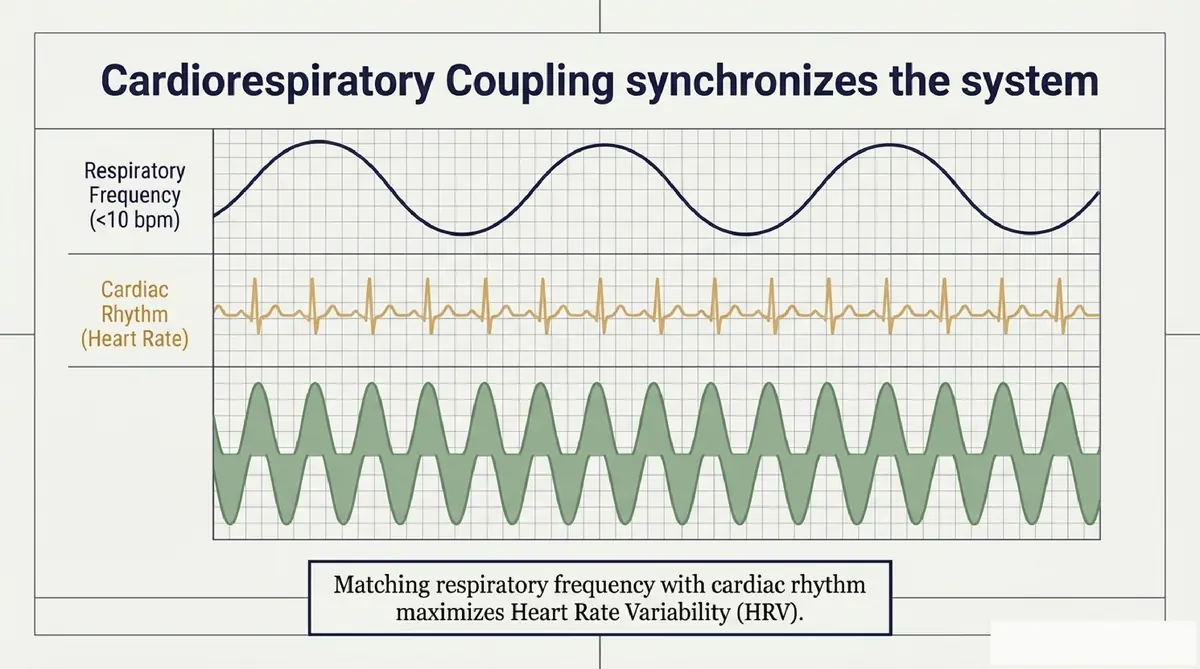
Matching respiratory frequency (<10 bpm) with cardiac rhythm creates Cardiorespiratory Coupling, producing maximum Heart Rate Variability (HRV).
These are not four isolated benefits. A single deliberate breath acts as the catalyst for a synchronized physiological cascade. By controlling the respiratory lever, you engineer the cornerstone of long-term autonomic resilience.