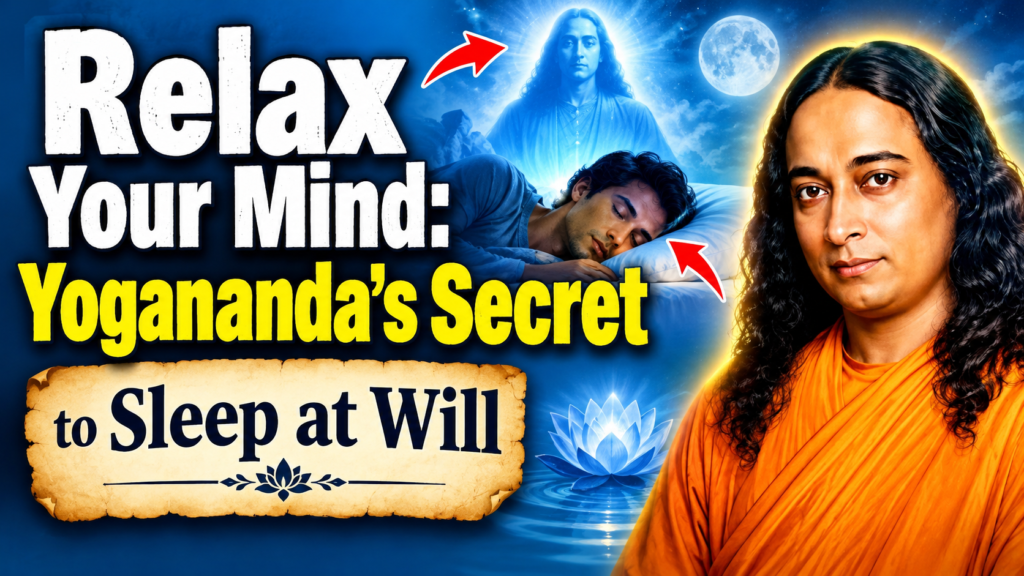
Mental relaxation signifies complete mental rest. You can achieve this by practicing going to sleep at will. Relax the body and think of the drowsiness you feel just before you fall asleep. Then try to reproduce that state. (Use imagination, not will, to do this.) Most people do not relax even while they sleep. Their minds are restless; hence they dream. Therefore, conscious mental relaxation is better than relaxation that is the by-product of passive physical relaxation, or sleep. In this way you can choose to dream or to keep dreams off your mental motion picture screen. No matter how busy you are, do not forget now and then to free your mind completely from worries and all duties. Just dismiss them from your mind. Remember, you were not made for them; they were made by you. Do not allow them to torture you. When you are beset by overwhelming mental trials or worries, try to fall asleep. If you can do that, you will find on awakening that mental tension is relieved and that worry has loosened its grip on you. Tell yourself that even if you died, the earth would continue to follow its orbit, and business would be carried on as usual; hence, why worry? When you take yourself too seriously, death comes to mock you and remind you of the brevity of material life and its duties. Mental relaxation consists in the ability to free the attention at will from haunting worries over past and present difficulties; consciousness of constant duty; dread of accidents and other haunting fears; greed; passion; and disturbing thoughts and attachments. Mastery in mental relaxation comes with faithful practice. It can be attained by freeing the mind of all thoughts at will and keeping the attention fixed on the peace and contentment within. By regular practice of meditation you can divert the attention from worry to peace. For this reason, the devotee who aspires to develop uniformly and steadily in spirituality must always keep the body quiet and not in perpetual motion and restlessness, keep the breath quiet by proper breathing exercises, preserve the vital essence by self-control and good company, and calm the mind with the practice of concentration and meditation. You can learn to switch off the life current from the entire body through conscious will by the steady, conscientious practice of the Hong-Sau technique of concentration.
Attributes: Paramhansa Yogananda
Learn the art of mental relaxation to quiet your thoughts and fall asleep at will. Discover how to release tension naturally.
This reflection covers the process of preparing the body and mind for rest, emphasizing the need to let go of restless thoughts and dreams. By using your imagination to replicate the gentle feeling of drowsiness, you can move toward a state of inner contentment and peace.
Achieving a calm mind is essential for those seeking to settle their consciousness before sleep. When you align your practice with these spiritual teachings, you can move beyond the habits of a busy day and cultivate a deeper sense of stillness that supports both your physical and spiritual well-being.
Subscribe for weekly wisdom on the teachings of Paramhansa Yogananda, and comment below on how you create a peaceful environment for your evening rest.